Published: December 22, 2025 Last Updated: December 22, 2025
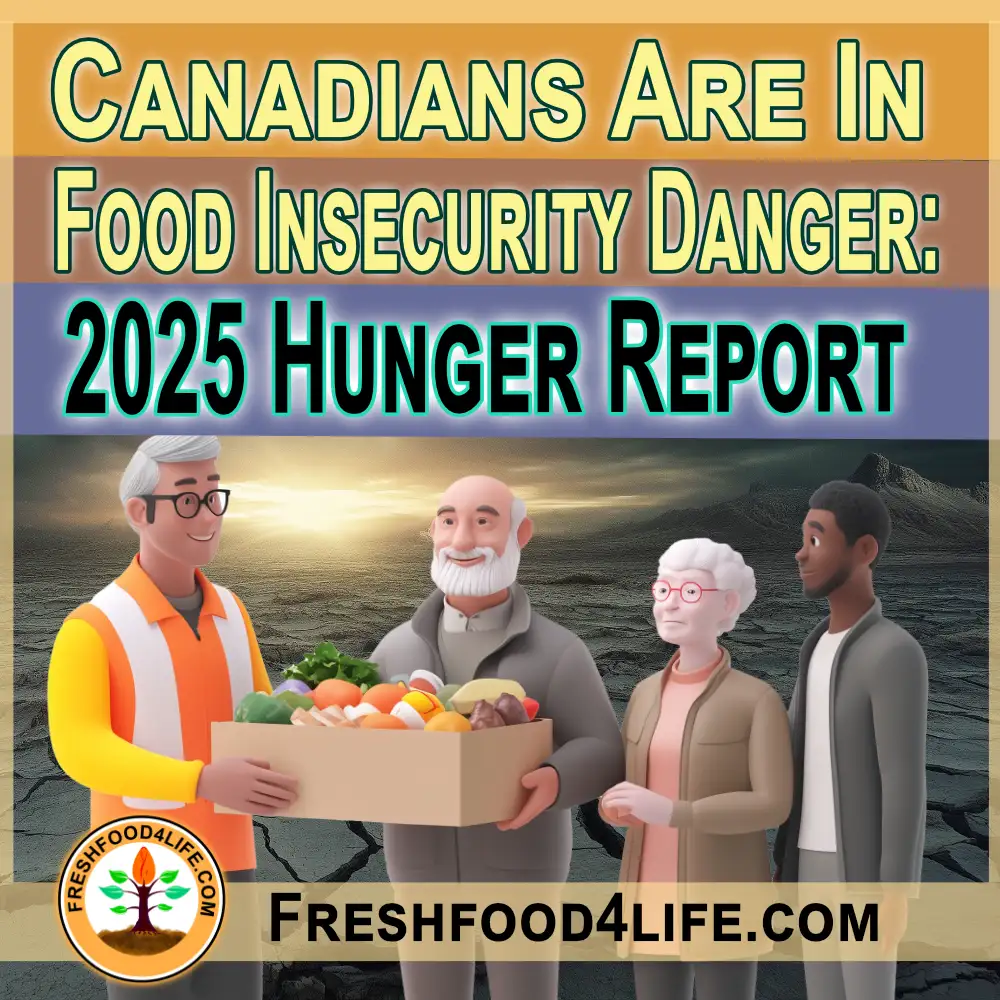
Food-bank usage has been normalized for the working class where its original purpose was to be a safety net for those in absolute poverty. To put in another way, food insecurityFood Insecurity Food insecurity is a sanitized way to describe the risk of hunger or starvation. It refers to household-level economic and social condition represented by limited or uncertain access to adequate food. It is not necessarily synonymous with hunger, although hunger can be an outcome of food insecurity. is now normalized in society.
Food Insecurity Backgrounder
I’ve written about food insecurity and hunger so many times in the past 20 years that I might seem like a broken record, or an audio set on repeat for the younger generation. I believe that food insecurity is such an important so I’ll keep repeating the message. For decades, I’ve seen how hunger has been impacting Canadians from my time at a food-bank in Toronto. Being an intake coordinator and having to assess who was worthy of food and who was not is one of the toughest jobs I’ve ever had to do mentally and emotionally, because I don’t want to see anyone have to go hungry.
Canada has for decades held a reputation as being a place for people from around the world to come to get a chance at a better life. After all, Canada was known as a humanitarian country. This was great and back in the 1980s, 1990s, and even the early 2000s, Canada had a lot of opportunity for people desiring to build a good life in Canada. Sadly, as of December 2025, Canada is a country in a state of distress and the working class is not prepared for the coming onslaught. Yet, the working class people of Canada are experiencing higher food prices, jobs being downsized, slowing spending in shops and malls as people remain fearful of the future, and other warning signs.
Understanding Food Insecurity in Canada
Problem: Food Insecurity Is Acceptable
In October 2025, Food Banks Canada released its annual Hunger Count 2025. The report was a dire look at Canadians’ reliance on food-banks. It reveals a deepening and normalized crisis of hunger and poverty across Canada, with nearly 2.2 million monthly visits to food banks recorded in March 2025. This nearly doubled the number from 2019. And the number of employed people using food-banks has gone up to where it is almost 20% or 1 in 5 food-bank users are working class people.
This means that as a nation, ordinary, average working-class Canadians have reached an all time low in terms of socio-economic status within their own country. Life for the rich is better while the life of the working class and poor keep getting worse. It is now at a point where everyone accepts food insecurity as a normal acceptable part of life.
Before 2000: Having a job meant that you could live with dignity and afford things like food, rent, utilities, phone, and even vacations from time to time.
After 2020: Having a job means that you still have to suffer the indignity of going to a foodbank, or purchase food off the “rotten/clearance shelf” in Walmart or Food Basic. People can barely afford rent, utilities, food, clothes, and don’t even think of going on a vacation.
Now, hear me clearly, going to a food-bank is not an indignity because a foodbank is a social safety net needed in society. The indignity is HAVING A JOB AND STILL NEEDING TO USE THE FOOD-BANK. Then what’s the point of the job? You suffer yourself in the job and sell your time to help make others rich while you still have to beg for charity in a food-bank? That is an injustice and an indignity to the employee.
Food-banks are a vital social safety net. If that net is being forced to catch more and more of society, how long before it finally ruptures causing an immense amount of pain, suffering, and undue hardship to millions of Canadians. This is a very serious situation. The answer is not to simply give more to food-banks. Hear me clearly, I did not say take away anything from food-banks either.
The solution to this horrific hunger crisis is not giving more money or food to food-banks but rather to restore the social contract of what having a job used to mean. Having a job used to mean being able to earn enough money to pay all your bills, eat enough food, raise a family, buy a home, buy a car, go on vacation, put your kids through school, and have enough left over for a good retirement. That is the social contract people sign up for when they decide to “go to school to get a good job”.
The members of the board of directors of big corporations will not restore this contract on their own because it has been very lucrative for them to exploit the middle class while enriching themselves for this piece of paper called money. The politicians who receive large campaign donations from those profiteering corporations have no incentive to create legislation to curb this blatant economic abuse of workers and the social safety-net systems. Food-banks have no incentive to lobby to make living affordable resulting in putting themselves out of business. Yes, big charity is also big business.
Back in 2011, the Hunger Count Report indicated that 90,000 Canadians access a food-bank per month. By March of 2025, the number had risen to 2.165 million people accessed a food-bank in that month. That was the highest number in the food-bank history to use a food-bank in a month. In just 14 years food-bank usage by Canadians increased by 2 million and that doesn’t even take in account people dying, or getting out of the food-bank system through increased income. Canada is not a land of prosperity for many new immigrants and citizens currently living here.
What directly affects the quality of life of people?
First, in order to have a good quality of life, food must be cheap and abundant. People must have good nutrition in order to maintain their physical health, strength, and vitality. If food is abundant but not cheap, only the rich are able to get access to good food while the working classes will suffer hunger and food deprivation. This is the situation in Canada currently. If food is scarce but cheap, people will begin to horde what little food there is available. This was the artificially created situation with the pandemic in 2020 and 2021.
The second thing that affects a person’s quality of life is access to a proper dwelling unit. A person needs a proper place to sleep and rest away from the rain, wind, snow, and heat depending on the season, and a place that can facilitate some leisure activities like reading, painting art, music, or meditation. This place needs to be affordable and readily available for the people to have a good quality of life. Currently owning a house in next to impossible in Canada with the high housing prices, and rent is extremely high thus draining away the precious after tax dollars of the working classes. Rent is high because mortgages used to purchase the rental properties are very expensive. The banks are becoming richer through usury across all sectors of society which impoverishes all of us collectively.
Both of these negative factors have resulted in food-back usage becoming normalized instead of being a safety net for those in dire need.
How to improve Food Insecurity
Ultimately it is going to be up to the working class to create the change they wish to see in the unjust situation currently on the landscape in Canada. This crisis will not stop until there is an event like a huge financial crash where people are so impoverished that they rebel against the rich. In China, the impoverished and exploited working class are burning down factories of their employers. When the people have nothing left to lose, they will behave without a care in the world.
At FreshFood4Life.com, we don’t want you to have to suffer as wave after wave of economic oppression sweeps the land. It is important to be prepared to help feed yourself and your family while others are in a panic mode. It is important to help your neighbours to start their gardens too in order ensure that neighbours can also feel food security. We created the Crisis-Proof Gardening course because the time to prepare is now. When you have a high functioning gardenhome garden A designated area around a residential property where individuals cultivate plants, fruits, vegetables, or ornamental plants for personal use. It comprises a farming system that combines physical, social, and economic functions on the area of land around a family home, providing a sustainable source of food and other benefits for the household, extended family, and friends. that give you high output thus decreasing your costs while increasing your abundance of food, you’ll help yourself in one sector.
Check out the Crisis-Proof Gardening course to get started: Click To Go To The Crisis-Proof Course